In Nashville, weeds don’t usually “appear” they slowly take advantage.
A lawn can look okay from the street and still be losing ground. Weeds creep into thinner turf, spread along edges, and start turning a clean yard into something that feels patchy and inconsistent. Weed control services in Nashville, TN help cut down that pressure so the grass has room to fill in again.
Nashville lawns deal with a tricky mix:
Nashville lawns deal with a tricky mix: humid heat, spring rain, dry stretches, and yards that vary wildly from full-sun bermuda to shady fescue pockets under mature trees. When turf gets stressed or thins out, weeds move in fast. Fairway Lawns focuses on weed control that fits the way lawns actually behave here, not a generic spray-and-go approach.
We build weed control around prevention, active treatment, and the condition of your turf, because a thin lawn and a thick lawn do not need the same plan.
Pre-emergent applications help reduce certain weeds before they establish. This is one of the most effective ways to keep Nashville lawns from getting overwhelmed, especially when warm-season weeds are gearing up.
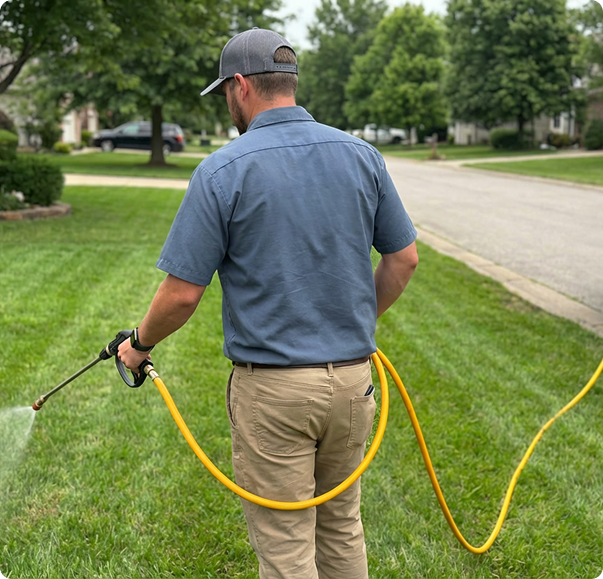
Post-emergent treatments address weeds that are already growing. This matters when weeds are visible across the lawn or when specific patches keep popping up in the same places.
Broadleaf weeds can spread through thin turf and stand out even after mowing. In Nashville, these often show up in transition periods and in lawns stressed by shade or compaction.
Grassy weeds can blend in early and then spread aggressively in warm weather, particularly in sunny lawns and along hot edges near pavement.
Some yards have repeat “problem strips”, the curb line, the driveway edge, the walkway to the front door, the gate path. Spot treatment keeps the focus where it belongs instead of treating every square foot like it has the same issue.
Weed pressure in Nashville comes in waves. Prevention timed to local conditions helps keep those waves smaller and easier to manage.
A lawn that is well-supported tends to crowd weeds out naturally. When it makes sense, we may recommend fertilization support as part of a weed-control strategy, especially where turf is struggling to stay dense.
Some weeds fade quickly. Others need follow-up to keep them from rebounding. Monitoring helps keep progress steady instead of restarting each season.
Weeds are a turf problem because they steal the exact resources grass needs to recover.
Weed control is not just about making the yard look nicer for a week. Weeds compete with grass for sunlight, water, nutrients, and space. When they spread, turf gets weaker, and the lawn becomes more open to the next round of invasion.
In Nashville, that cycle often starts with stress: compacted soil from foot traffic, shaded areas that never quite thicken up, uneven irrigation coverage, or summer heat that pushes turf hard. Once turf thins, weeds find openings and expand them.
A consistent weed plan helps protect the lawn’s growing space so the grass can hold ground through the season instead of constantly losing it.
Once you know what weeds you’re seeing, the plan gets much less guessy.
Different weeds behave differently in Nashville lawns, and timing matters.
Broadleaf weeds often move into thin turf and spread during seasonal transitions. These can include clover, chickweed, henbit, and other broadleaf pressure depending on the time of year.
Warm weather can bring grassy weeds that spread quickly in open turf. Crabgrass and goosegrass are common examples that show up when lawns are thin or stressed.
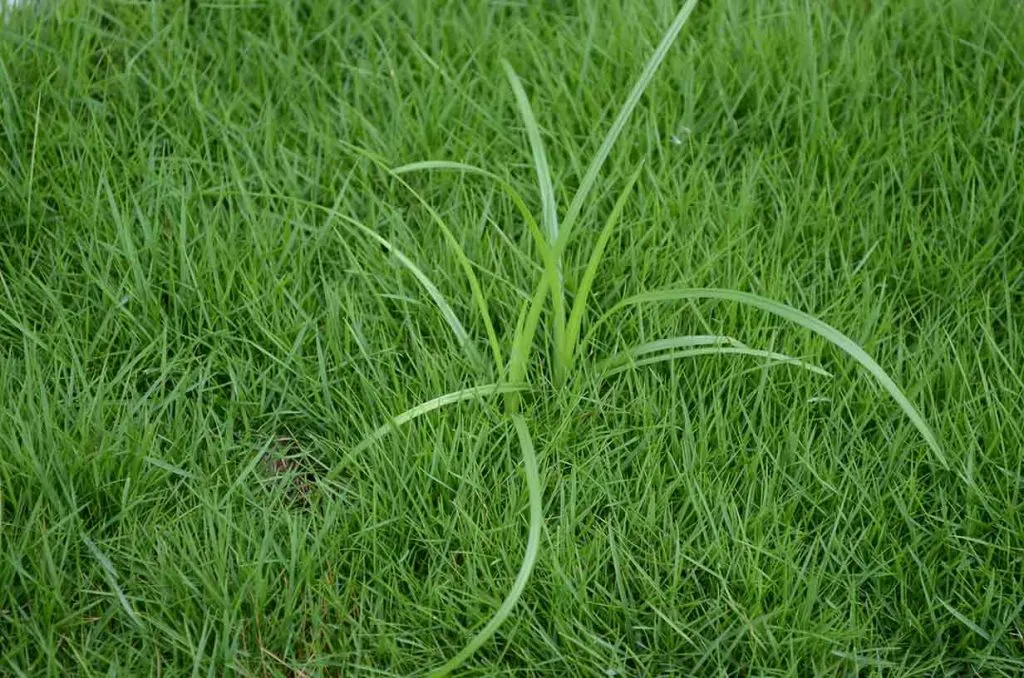
In areas that stay wet or get overwatered, weeds like nutsedge can become persistent. These often point to moisture patterns that need attention along with treatment.
Weeds along curb lines, walkway seams, and driveway edges are common because turf breaks down there faster and soil is often compacted.
A steady process is what keeps weed control from turning into a yearly frustration.
We keep weed control simple to follow, but specific to the property.
We look at the whole lawn, turf density, stress areas, shade patterns, drainage behavior, and where weeds are establishing.
We identify what weeds are present so the timing and approach match what is actually growing.
We tailor the plan to your turf type, the season, and the severity of weed pressure, whether it is light breakthrough or heavier spread.
Treatments are applied based on need, with attention to protecting turf performance during heat and seasonal transitions.
We track progress, watch for breakthrough, and adjust when weather and weed cycles shift.
Nashville weed pressure changes by season, and the lawn needs different priorities as it moves through the year.
Spring is when prevention and early correction help the most. Weeds can establish before homeowners notice, especially in thinner areas.
Summer brings heat, humidity, and turf stress. Weed pressure often builds along hot edges and in lawns that thin out during dry stretches.
Fall can bring another wave of weeds as temperatures shift. Managing fall pressure helps keep the lawn cleaner heading into the next cycle.
Even in cooler months, Nashville can have mild stretches where weeds appear, especially in thin turf or bare spots.
Some lawns can be managed with a more selective, reduced-input approach, depending on weed pressure and turf condition.
If weeds are limited to specific zones, a spot-focused plan may be a good fit.
A thicker lawn naturally crowds weeds out. Supporting turf density can reduce how much active correction is needed over time.
If a lawn is heavily invaded, it often needs stronger correction first. After that, a lighter maintenance strategy may make more sense.
Nashville lawns do better when weed control is timed locally and built around turf, not just the weeds.
Weed control pricing should reflect the lawn’s condition, not a one-size package.
Weed control pricing can vary based on lawn size, weed coverage, turf density, and whether your property needs prevention, active treatment, or an ongoing seasonal plan.
Common factors include lawn size, severity of weed pressure, turf condition, treatment frequency, and whether key areas require extra attention.
A lawn evaluation helps determine what is going on and what type of plan makes sense for your yard.
We focus on fitting the program to the lawn, not pushing the biggest option by default.
Most weed questions in Nashville come from people who are tired of the same patches returning every year.
If your lawn is getting taken over along the edges, thinning out in the same zones, or looking uneven no matter how often you mow, Fairway Lawns can help. We will evaluate your Nashville property, explain what is driving the weed pressure, and recommend a plan that fits your turf and the season you are in.